


Culture and promotion
Acceptance of risk, choosing to take part
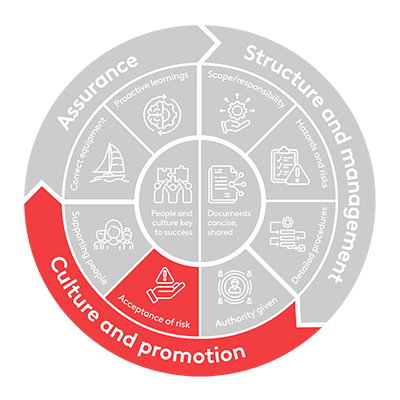
Definition
Ensuring participants know what they are letting themselves in for by drawing their attention to the risks involved, what the organisation is doing to manage those risks, what is expected of participants and enabling them to choose to take part on that basis.
Steps
Guidance
Competitors at sailing events will be familiar with the risk statement often seen in the Notice of Race. A similar approach can be taken for all activities delivered and would reflect good practice by drawing residual risks to participants attention and allowing them to decide whether they want to accept those risks.
Wireframe
As you think about how people sign-on and book for different types of activity, consider:
- Booking - How participants sign up for the activity, session, series, season etc
- Information - Getting across what the activity entails, the equipment available and what people are responsible for providing themselves
- Data - The information you need to gather to establish:
- The participant can take part and isn’t under the influence of drugs or alcohol (for example)
- Any support needs the participant has that the organisation needs to know about to keep them safe on the water
- Risk statement - Agreement and acknowledgement of the risks involved, including specific local risks, what is expected of participants, and what is provided by the organisation and the fact that any assistance is limited to that which can be practically provided in the circumstances
- Consent – a way of people giving their consent to take part
- Sharing information – Explaining how you share safety critical personal information with those that need to know
Checklist
☐ Have you decided what sign on / booking process you need for each of the activities you deliver?
☐ How do you get participants to acknowledge the inherent risks in taking part, their part in keeping themselves safe, and their consent to get involved?
☐ How do you inform those responsible for safety on the water about any specific needs individuals may have while taking part?
☐ How do you make sure any personal sensitive data about people is kept in line with data protection regulations and is shared only on a need-to-know basis?